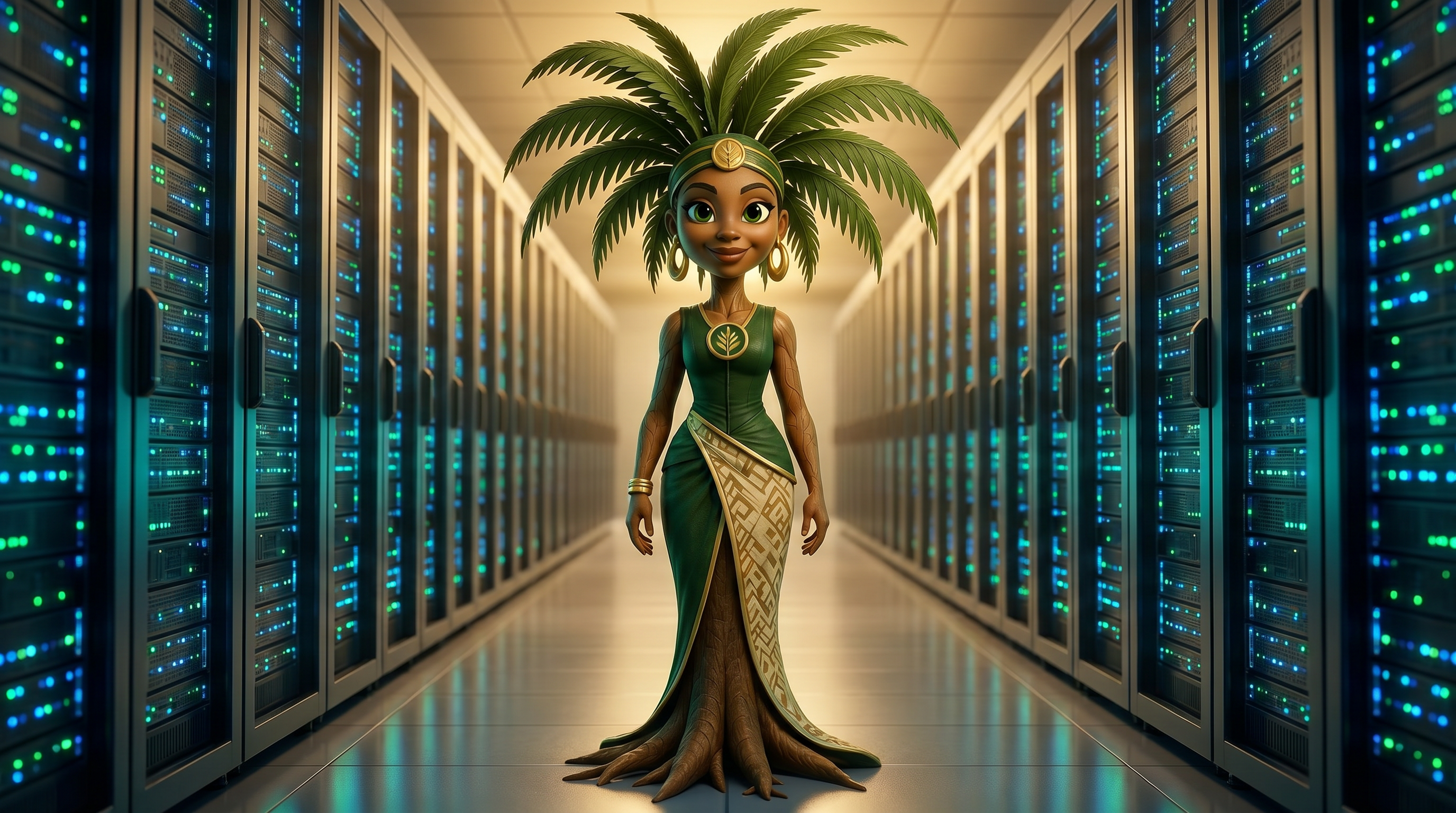
Zola in the data center corridor
Project 02 · Phase 2 Development

Sovereign Data Center

A two-site sovereign cloud — Kinshasa primary, Lubumbashi disaster-recovery. The DRC's data stays in the DRC.

Sovereign Infrastructure

The DRC's Data Must Stay in the DRC

Today, the Democratic Republic of Congo's most sensitive data — government records, financial systems, telecommunications infrastructure — is largely hosted on servers outside the country. This creates a fundamental vulnerability: the DRC does not control its own digital sovereignty.

What we mean by "sovereign": the data center is sited on Congolese soil, its hosted data is subject to DRC law, and the operating entity (UPTWB SAS) is DRC-registered under OHADA. This describes physical and legal locus — not a separate legal regime above DRC, OHADA, or applicable international law.

Palm Leaf Partners is planning the DRC's first data center designed to Uptime Institute Tier III standards on Congolese soil — with a second disaster-recovery site in Lubumbashi. This facility is intended to host the national address registry, government cloud services, the call center data backbone, and enterprise systems. Final certification can only be issued by the Uptime Institute upon completion.

A Tier III design target corresponds to 99.982% availability — the second-highest design tier in the Uptime Institute framework, supporting concurrent maintenance of any component without service disruption. Operational uptime will be confirmed only after commissioning.

TIER III
Concurrently Maintainable Design Target
99.982%
Tier III Availability Target
N+1
Redundancy
2
Sites: KIN + LUB
SOC
24/7 Operations
01 Built for sovereignty.

The DRC's most critical data — hosted on Congolese soil, under Congolese law.

The primary facility in Kinshasa is designed to Tier-III standards — the second-highest design tier in the Uptime Institute framework. Redundant power, cooling, and network paths support concurrent maintenance of any component without taking the system down. The national address registry, government cloud services, and the call center data backbone all live here. Sovereign. Secure. Permanent.

Zola in the data center
Zola

"This is not a foreign company's server farm. This is the DRC's own infrastructure — built here, governed here, serving here."

Zola · Palm Leaf Partners

Server racks with blue LED lighting
02 Always watching.

A Security Operations Center that never sleeps.

Embedded within the facility is a dedicated Security Operations Center — a 24/7 command room staffed by cybersecurity professionals monitoring every system, every connection, and every threat in real time. The SOC protects not just the data center itself, but the entire Palm Leaf Partners infrastructure ecosystem — the address registry, the fiber backbone, and the call center network.

Automated threat intelligence, incident response playbooks, and compliance reporting for OHADA law and DRC government requirements run continuously — so the systems that serve the DRC are always protected.

03 Two sites. One nation.

Kinshasa primary. Lubumbashi disaster-recovery. No single point of failure for the country.

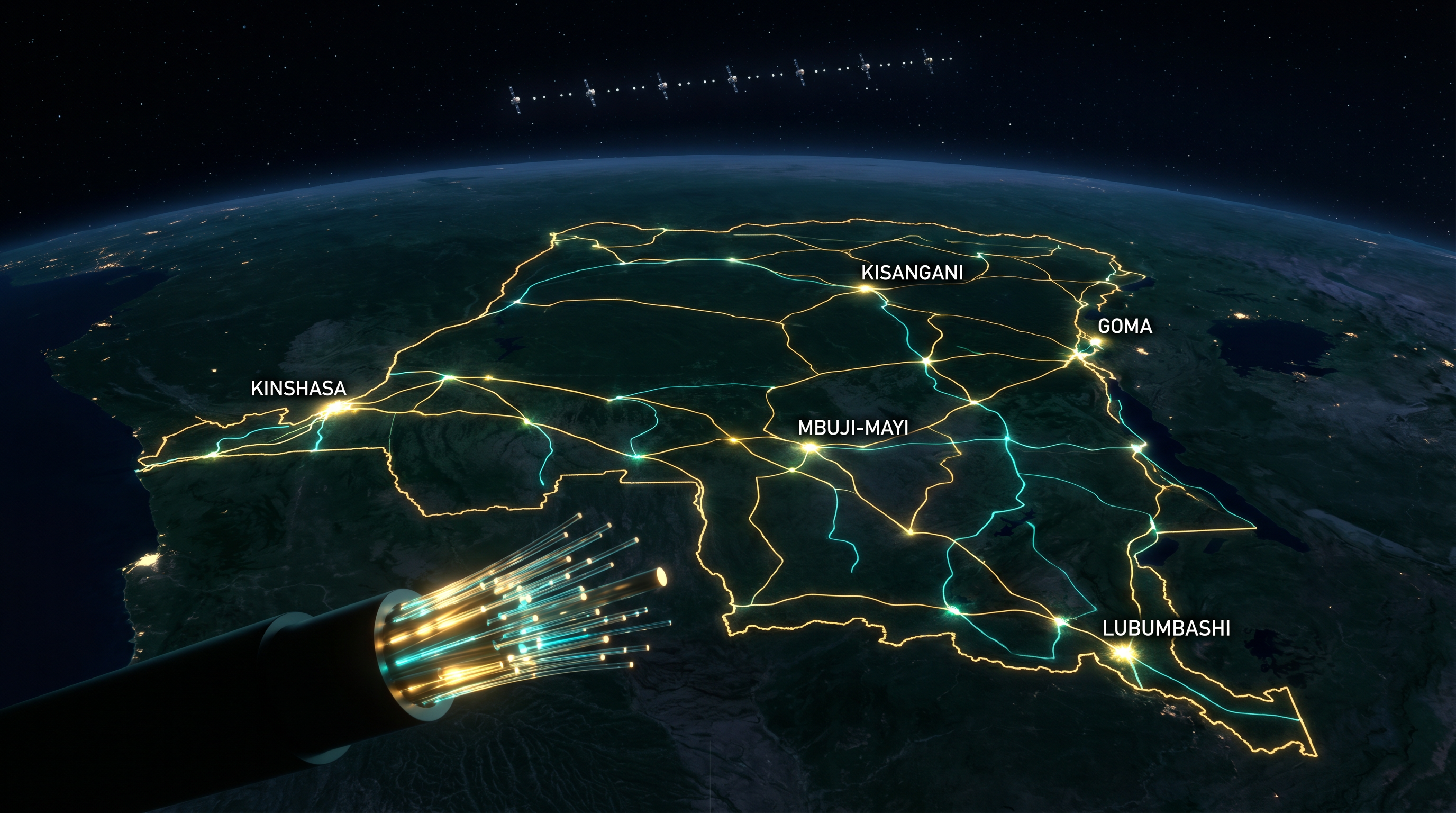
The Lubumbashi disaster-recovery site ensures that no single event — power failure, natural disaster, or infrastructure disruption — can take down the DRC's national data infrastructure. Data replicates continuously between the two sites. If Kinshasa goes dark, Lubumbashi takes over in seconds. The country never loses its map, its records, or its emergency dispatch capability.

Fiber connectivity between cities
Zola

"Two sites means the country never goes dark. That's not redundancy — that's responsibility."

Zola · Palm Leaf Partners
Inside the Build — Technical Specifications
SpecificationDetail
Tier ClassificationDesigned to Tier III — Concurrently Maintainable (Uptime Institute Standard); certification to be issued upon commissioning
Availability Target99.982% design target (less than 94.6 minutes downtime per year); operational SLA confirmed post-commissioning
Power RedundancyN+1 redundant power paths with independent UPS systems
Cooling ArchitectureN+1 precision cooling with hot/cold aisle containment
Physical SecurityMulti-factor biometric access, 24/7 CCTV, mantrap entry systems
Network ConnectivityDual fiber entry points, carrier-neutral, connected to national fiber backbone
Security Operations Center24/7 SOC with SIEM, threat intelligence, and incident response
SitesKinshasa (primary) · Lubumbashi (disaster recovery)
ComplianceOHADA law, DRC data sovereignty regulations, ISO 27001-aligned (certification planned post-commissioning)
Primary Hosted SystemsNational Address Registry, Government Cloud, Call Center Data, Enterprise Services

The Backbone of Digital Sovereignty

The data center connects the address map, the fiber network, and the call centers into one coherent national system.

See the Fiber Backbone →